
ESG Criteria in Vimbio Corp’s Brand Catalogs
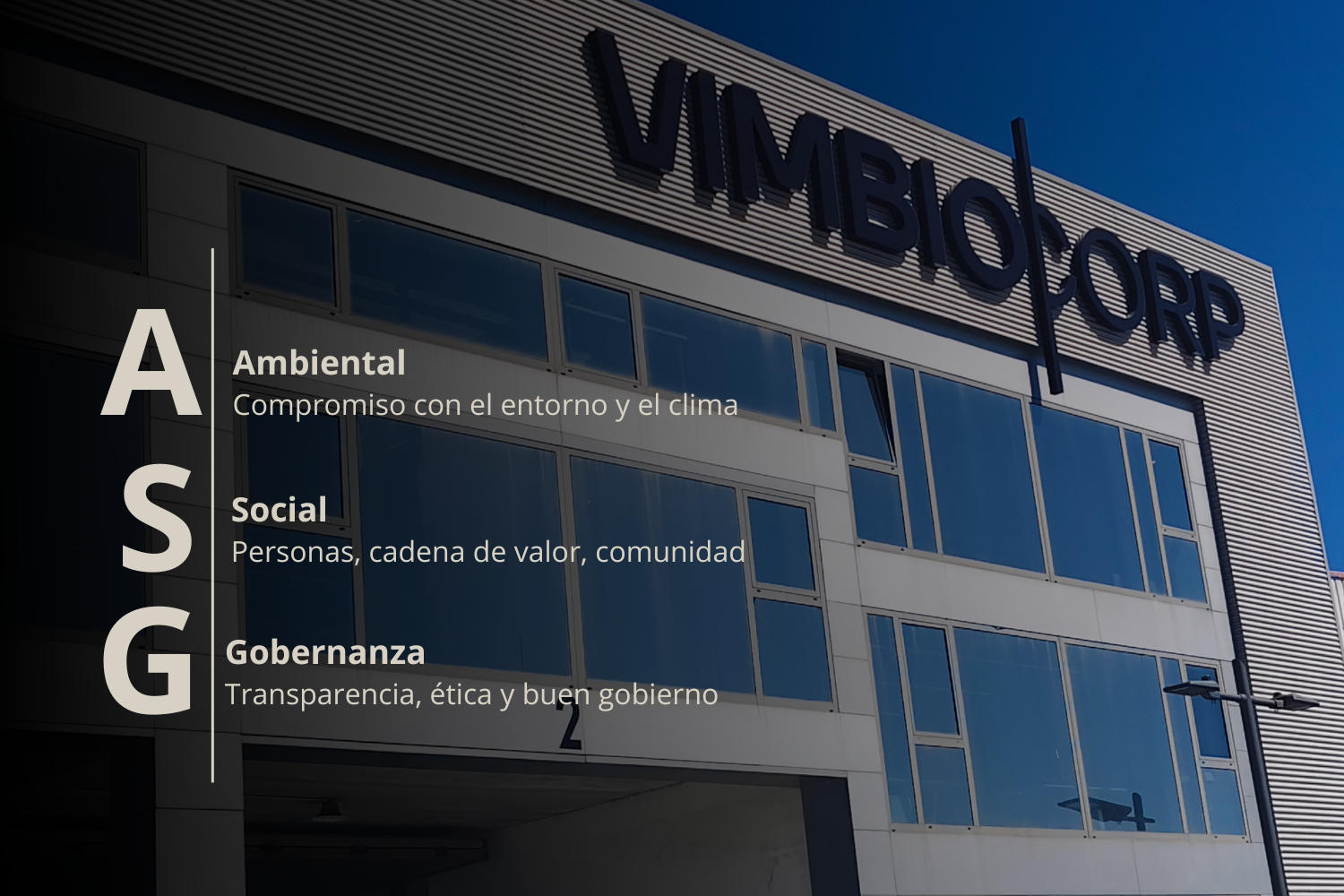
The European Ecodesign Regulation (ESPR), in effect since July 2024, makes product sustainability a market requirement. Vimbio Corp has been incorporating these criteria into the design and development of its brands for years.
The regulation stipulates that products sold in the European Union must meet criteria for durability, circularity, resource efficiency, and traceability throughout their life cycle. In April 2025, the European Commission approved the 2025–2030 Work Plan, which identifies priority product groups (including steel and aluminum, textiles, furniture, and tires) and sets out the phased development of specific requirements through delegated acts, with effective implementation dates extending through 2026 and 2027 for the first categories.
Moonoff, the street lighting division of Vimbio Corp, has based its design process on principles of circularity since its founding in 2012. The choice of materials and the architecture of its luminaires meet sustainability criteria that result in the standardization of components to extend the product’s useful life, ease of field upgrades, and a design geared toward recycling at the end of the product’s life cycle.
Aluminum plays a central role in this approach. Used primarily in lighting fixture housings, this material combines structural and thermal strength with a high rate of industrial recoverability at the end of its useful life, allowing it to be reintroduced into the production cycle with minimal degradation of its properties. This characteristic makes it a benchmark for the practical application of the circular economy in the street lighting sector.
The modular design rounds out the approach. The architecture of Moonoff’s products allows electronic components to be replaced individually, without having to replace the entire luminaire. The result is an effective extension of the product’s service life, a reduction in waste, and an improvement in the total cost of ownership for the customer.
A catalog that meets sustainability requirements
The perspective of professional buyers has changed substantially in recent years. Municipalities, urban service concessionaires, hospital groups, and organizers of European tenders now include requirements regarding environmental footprint, material traceability, waste management, and manufacturer certifications in their approval processes.
Vimbio Corp has worked simultaneously on both the system and product levels. The ISO 14001 environmental management and ISO 50001 energy efficiency certifications, along with its participation in the United Nations Global Compact, form the institutional framework that underpins design decisions. The corporation subjects its management systems to annual external audits (covering quality, the environment, energy efficiency, and workplace safety) as part of its transparency and governance policy.
At the product level, the reduction of plastic packaging and the compatibility of lighting fixtures with smart control technologies to optimize energy consumption during installation are attributes that directly contribute to the ESG profile of each product in the catalog.
Horizon 2030
Vimbio Corp’s sustainability strategy is structured around measurable, time-bound goals. By 2030, the company aims to reduce Scope 1 and 2 CO₂ emissions by 25%, increase the efficiency of its own photovoltaic facilities by 20%, and incorporate occupational health and safety criteria into the certification process for 50% of its supply chain.
On the social front, the company conducts an annual survey of employee satisfaction and maintains ongoing training programs for all staff members.
These goals are part of the corporation’s alignment with the United Nations Sustainable Development Goals 9 and 12 (sustainable industry and innovation, and responsible production and consumption), the framework around which Vimbio Corp has structured its 2024 Sustainability Report, published as part of its Global Compact report and available on its corporate website.
European standardization of ecodesign requirements and the professional market’s growing demand for ESG criteria place these factors at the center of product strategy for manufacturers in the technology and industrial sectors.